In an emergency, call 1669 now. Read the rest later.
This page is general information, not medical advice. If someone is seriously ill or injured, call 1669 (Thailand's nationwide medical emergency number) or go straight to Maharaj Nakorn Chiang Mai Hospital (Suan Dok).
- The tiers are an informal guide. They are a plain-language way to group Chiang Mai hospitals, not an official ranking or accreditation list, and not a recommendation of any hospital.
- Details come from the hospitals' own websites and public sources, read on 24 November 2026. Services, hours, phone numbers and fees change. Phone the hospital to confirm before you rely on anything.
- The after-hours emergency advice is the Ambassador's local guidance, not an official hospital statement. Confirm hours and services by phone when you are not in a crisis.
- Social security rules are summarised, not interpreted. Confirm your own position with your employer's HR and the Social Security Office. Our site disclaimer applies to this page.
Top Tip: Ask About Discounts
Some hospitals may give discounts for membership or for paying cash. Ask the registration or billing desk before you pay, not after.
What are the best hospitals in Chiang Mai?
Bangkok Hospital Chiang Mai and Chiangmai Ram Hospital are the two top private hospitals for expats, with English-speaking teams, fast diagnostics and insurance support. Maharaj Nakorn Chiang Mai Hospital (Suan Dok) is the university referral hub for severe and complex cases, at far lower fees. Sriphat Medical Center is the middle ground between the two.
Chiang Mai punches well above its weight for a city of its size. Bangkok still holds an edge in ultra-rare subspecialties, mega-scale hospital campuses and high-volume international concierge services. For routine specialist consults, diagnostics, orthopaedics, cardiology, general surgery and standard medical tourism procedures, Chiang Mai is close, often with shorter waits, lower out-of-pocket costs and a calmer pace.
This guide covers the tiers, the emergency plan, each major hospital with its official website and a map link, and how social security hospital registration works for expat workers. For what each level of care costs in practice, from government clinics at 30 THB to private hospitals, see our budget medical services guide.
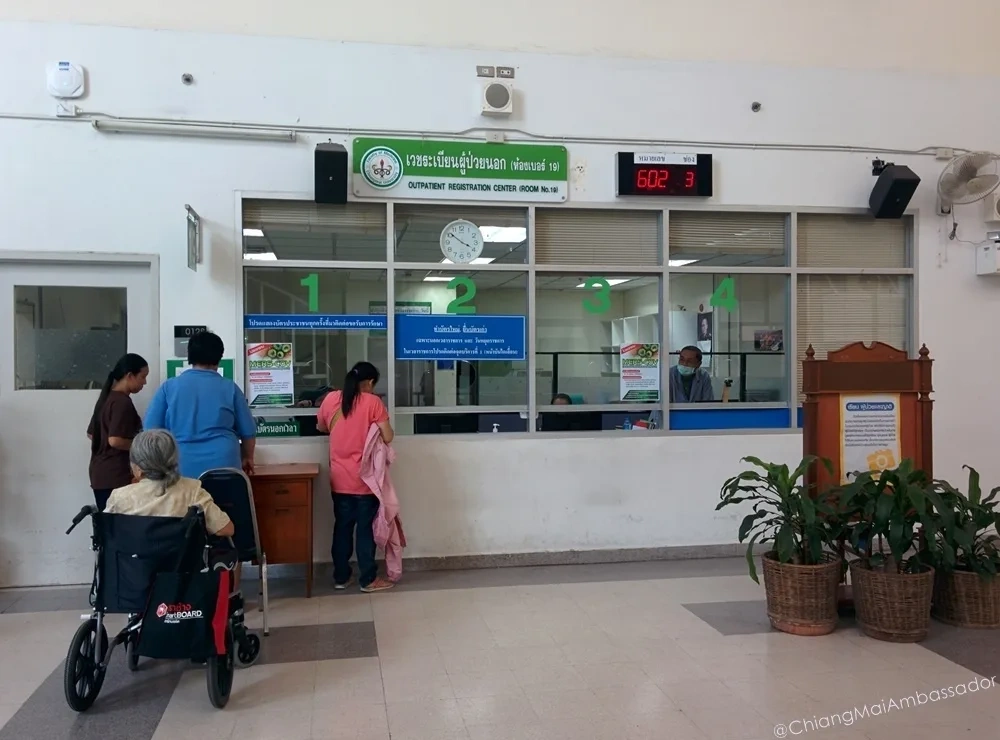
Where should I go in a medical emergency in Chiang Mai?
Outside normal clinic and hospital hours, such as late nights, overnights and off-peak periods, go to Maharaj Nakorn Chiang Mai Hospital (Suan Dok) for emergencies. It is the university referral hub, with the trauma, critical-care and specialist cover that other facilities in the city may not have in place after hours. Map.
Some other hospitals offer emergency services and run full daytime departments, but their out-of-hours readiness for serious trauma and critical care varies. You can arrive at one and be told to go elsewhere, which costs time you may not have. This guidance comes from a friend of the Ambassador who worked in a Chiang Mai EMS unit.
Call 1669 for an ambulance, Thailand's nationwide medical emergency number. The crew takes you to the nearest facility with an emergency department unless you ask for a specific hospital, so say you want Maharaj Nakorn. Save 1669, your insurer's assistance line and the hospital's Google Maps pin in your phone now. Our Chiang Mai insurance guide covers the cover options.
How do the healthcare tiers work in Chiang Mai?
Matching your need to the right tier saves money and time. Here is the plain-language version, from our general reading of the hospitals' own descriptions:
| Tier | Hospitals | Best for | Trade-off |
|---|---|---|---|
| Top-tier private | Bangkok Hospital Chiang Mai, Chiangmai Ram Hospital | Fast diagnostics, English-speaking teams, expat and insurance support, planned procedures | Highest fees. For the most complex cases or serious trauma the university hospital is often the referral point. |
| University super-tertiary | Maharaj Nakorn Chiang Mai Hospital (Suan Dok) | Severe trauma, complex surgery, deep specialist medicine, low fees | Longer queues and more paperwork than private hospitals. |
| University semi-private | Sriphat Medical Center (CMU) | University specialists with private-style booking, quicker outpatient flow and private rooms | Not an emergency centre. A middle ground between public and private. |
| Mid-tier private and mission | McCormick Hospital, Lanna Hospital | Routine, general and some specialty care at moderate rates | Narrower specialist depth than the top tiers. |
Mainstream: Bangkok Hospital Chiang Mai or Chiangmai Ram if you have international insurance or want the easiest English-language experience. Deep Cut: Sriphat for a specialist consult at university rates without the public-ward queue, which is one of the better-value moves in the city.
Which Chiang Mai hospitals stand out? Websites and maps
| Hospital | What it is known for | Links |
|---|---|---|
| Maharaj Nakorn Chiang Mai Hospital (CMU / Suan Dok) | Northern Thailand's major university hospital for complex, serious and emergency care. | CMU Faculty of Medicine · Map |
| Sriphat Medical Center (CMU) | University-backed specialist centre with private-style clinics, diagnostics and inpatient rooms. | Sriphat website · Map |
| Bangkok Hospital Chiang Mai | Top-tier private hospital in the BDMS network. Complex care, specialist referrals, international and expat services. | Official site · Map |
| Chiangmai Ram Hospital | Central private hospital known among expats for broad specialist departments, diagnostics and inpatient care. | Official site · Map |
| McCormick Hospital | Historic hospital near Wat Ket with accessible routine care and a budget-friendly alternative to top-tier private rates. | Official site · Map |
| Lanna Hospital | Established private hospital serving Chiang Mai residents with general and specialty services. | Map (we could not confirm an official site) |
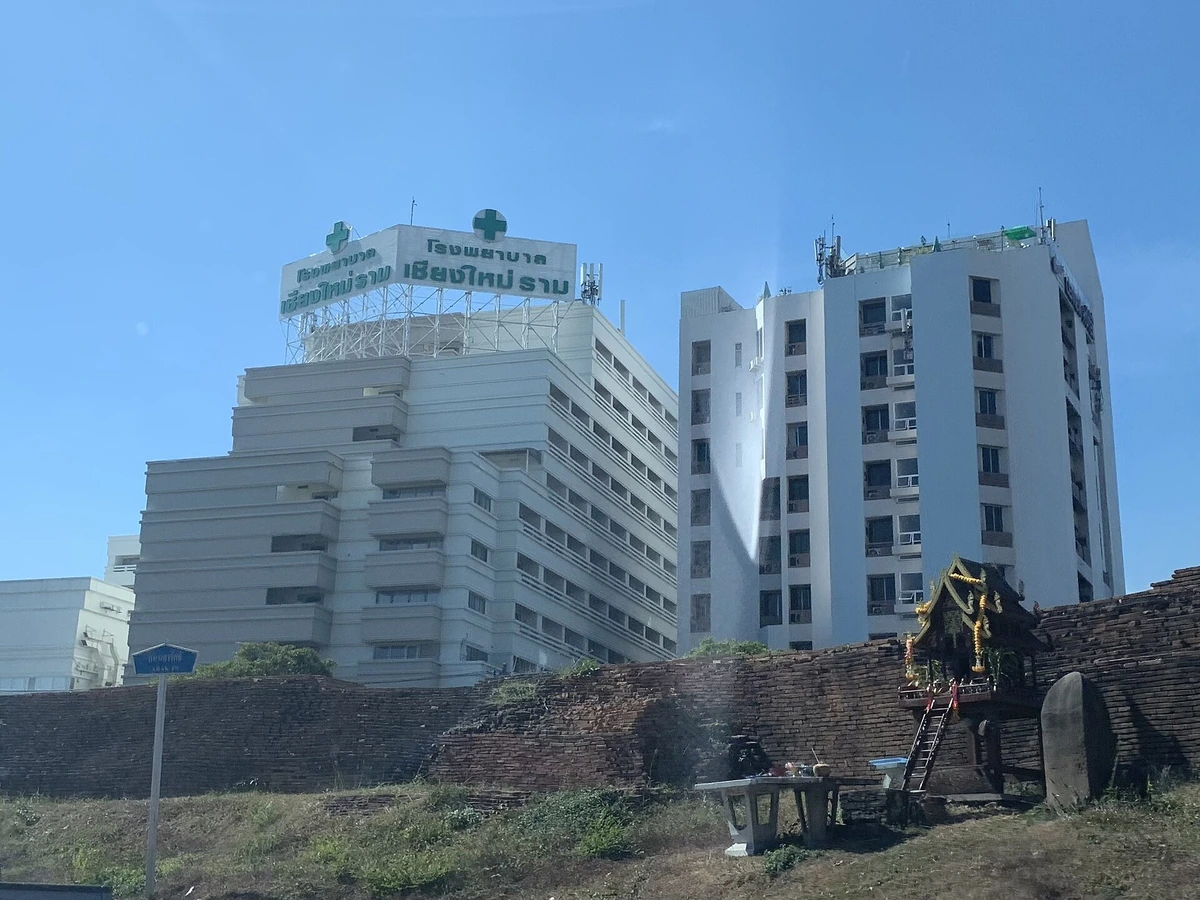
McCormick is near the Wat Ket riverside area, and Chiangmai Ram sits on the edge of the Old City. For a Nimman base, see our Nimman guide, and for choosing where to live relative to a hospital, our where to stay guide.
For dental work, read our Chiang Mai dental care guide and the community roundup of dentists expats recommend. Both hospitals and clinics do dental, but most expats use specialist clinics for routine work.
How does Thai social security work for expat workers in Chiang Mai?
Foreigners employed legally in Thailand on a valid work permit and work visa are generally enrolled in Thailand's Social Security Office (SSO) scheme through their employer, and receive the same statutory protections as Thai nationals. How you actually use a Chiang Mai hospital depends on your section, your registered hospital and whether it is routine or an emergency. Before any of this, you will need a medical certificate for your work permit.
| Section | Who it covers | Key notes |
|---|---|---|
| Section 33 | Salaried employees with a registered Thai employer. | The broadest cover: care at your registered SSO hospital, maternity, child, disability, old-age and unemployment benefits, subject to contribution rules. From January 2026 the wage ceiling is 17,500 THB a month (5% contribution, a maximum of 875 THB, ~$26 USD, each from employee and employer) for 2026 to 2028. Sickness and injury care outside work generally needs contributions for 3 of the prior 15 months. |
| Section 39 | Former Section 33 members who leave formal employment and keep paying voluntarily. | Sources say you generally need at least 12 months under Section 33 and must apply within 6 months of leaving. It keeps core health, maternity, disability, child, death and old-age cover and drops unemployment cover. Missed payments can lapse it. |
| Section 40 | Self-employed and informal workers outside Sections 33 and 39. | Tiered voluntary plans with narrower benefits. Whether foreigners qualify, especially without a work permit, is unclear in the sources we checked, so ask the SSO before you count on it. |
The contribution ceiling is published to rise to 20,000 THB for 2029 to 2031 and 23,000 THB from 2032, under a ministerial regulation published in December 2025. Contribution details and the official forms are on the Social Security Office website.
Picking and using your registered hospital
- Choose a hospital you can reach. Under Section 33 you select a primary hospital from the SSO network. Pick one that fits your commute and comfort level rather than accepting the default.
- Registered hospital versus any hospital. Routine and non-emergency covered care generally runs through your designated SSO hospital. A different private hospital for a routine visit usually means paying yourself or using separate insurance.
- Emergencies are treated differently. Emergency and acute injury rules allow initial care outside your home hospital, with reimbursement or coordination subject to caps and documents. Keep itemised receipts, medical certificates and your passport and SSO details in case you need to claim.
- Mind the ceiling and consider top-up insurance. SSO benefits are tied to statutory wage ceilings, and SSO wards and standard medicines differ from private rooms and specialist drugs. Many expat workers add private health insurance for faster private-hospital access, private rooms and wider specialist choice.
- Get HR to help. Official SSO forms and portals are mostly in Thai, so ask HR to help with registration, hospital changes and claims.
What should medical tourists in Chiang Mai check?
If you are travelling to Chiang Mai for surgery, dental work, diagnostics or a specialist procedure, work through this list before you book flights.
Before you book
- Gather recent medical records, scans and medication lists, and share digital copies so the specialist can review them before you fly.
- Compare accreditations, specialist track records and full quotes. Ask what is included and what is extra: surgeon, anaesthesia, implants or prosthetics, lab tests and room days.
- Confirm what your insurance covers for planned medical travel, and the payment and refund terms.
Travel and entry
- Check passport validity and entry rules for your visa category, and carry any hospital appointment letters. Start with our visa overview.
- Book recovery-friendly lodging near the hospital: lift access, quiet, air-conditioning and easy transport beat nightlife.
- Build buffer days before and after the procedure. Avoid tight flight schedules on arrival or right after surgery. If you are coming in the Feb to Apr smoky season, plan recovery indoors and ask your doctor about air quality and breathing.
At the hospital
- Bring your physical passport for registration and billing. Thai hospitals use it for records, prescriptions and discharge paperwork.
- Confirm post-op support, medications and emergency contacts. Know who to call after hours and whether you need a companion for the first 24 to 48 hours.
Recovery and the trip home
- Get fit-to-fly clearance and complete follow-up checks. Confirm cabin-pressure and mobility rules before flying home.
- Collect the full discharge summary, imaging and receipts. Keep copies for your home doctor and any insurance claim.
Key Takeaways
For an emergency, call 1669, and after hours head to Maharaj Nakorn (Suan Dok). For planned care, Bangkok Hospital Chiang Mai and Chiangmai Ram Hospital are the top private choices, Maharaj Nakorn (Suan Dok) is the university hub for severe and complex cases, and Sriphat is the value middle ground. If you work legally in Thailand, you are generally in Section 33 social security, but your routine care runs through your registered hospital, so check which one it is. For prices at every level, see our budget medical services guide.
Frequently Asked Questions
What is the best hospital in Chiang Mai for foreigners?
For most expats, Bangkok Hospital Chiang Mai and Chiangmai Ram Hospital are the two top private choices, with English-speaking teams and insurance support, while Maharaj Nakorn Chiang Mai Hospital (Suan Dok) is the university referral hub for severe or complex cases. The best one depends on what you need and whether you have insurance.
Where should I go in Chiang Mai for an after-hours emergency?
Head to Maharaj Nakorn Chiang Mai Hospital (Suan Dok) for emergencies outside normal hours, such as late nights and overnights. It is the university referral hub with trauma, critical-care and specialist cover. Some other hospitals offer emergency services, but their after-hours readiness varies, so you may be sent elsewhere. Call 1669 and ask for Maharaj Nakorn.
What number do I call for an ambulance in Chiang Mai?
Call 1669, Thailand's nationwide medical emergency number, for an ambulance anywhere in Chiang Mai. Crews take you to the nearest facility with an emergency department, and you can ask for a specific hospital. After hours, ask for Maharaj Nakorn (Suan Dok).
Does Thai social security cover foreigners in Chiang Mai?
Yes, if you work legally in Thailand. Foreigners with a valid work permit employed by a Thai company are generally enrolled in Section 33 social security through the employer. Retirees and others without an employer are not covered that way, and eligibility for the voluntary sections is less clear, so ask the Social Security Office.
How much is Thai social security per month in 2026?
In 2026 to 2028, Section 33 contributions are 5% of wages up to a 17,500 THB monthly ceiling, so the maximum is 875 THB (~$26 USD) a month from the employee and 875 THB from the employer. The ceiling rises to 20,000 THB in 2029 and 23,000 THB in 2032, according to the published schedule.
Guru Tip: Do the Boring Part Before You Need It
- Save three numbers today. 1669 for an ambulance, your insurer's 24-hour assistance line, and the Google Maps pin for Maharaj Nakorn (Suan Dok), where you should head after hours.
- Carry a photo of your passport and insurance card. Registration is slow when you are in pain and the paperwork is at home. Thai hospitals want the passport for records and billing.
- Pre-register while you are well. If you will use a private hospital regularly, ask whether you can open a patient record in advance. It saves time on the day you are unwell.
- Ask about English-speaking doctors by name. Departments differ. Ask the international desk which doctor speaks English for your problem and book that doctor, rather than whoever is free.
Top Tip: Ask About Discounts
Some hospitals may give discounts for membership or for paying cash. Ask the registration or billing desk before you pay, not after. Terms differ by hospital and can change, so get any discount in writing on the bill.
Reminder: this page is general information, not medical advice, and not an official ranking. Hospital details are from their own public pages read on 24 November 2026 and can change. In an emergency call 1669. See our site disclaimer.